• Technical Guide to Power Plant SCR Catalysts: Composition, Selection, Deactivation, and Regeneration
    Jul 28, 2026 Technical Guide to Power Plant SCR Catalysts: Composition, Selection, Deactivation, and Regeneration
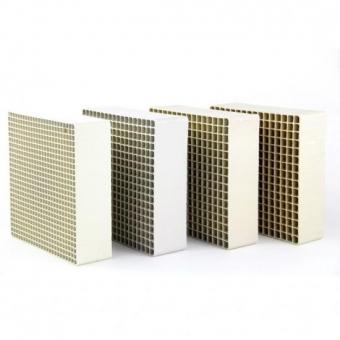
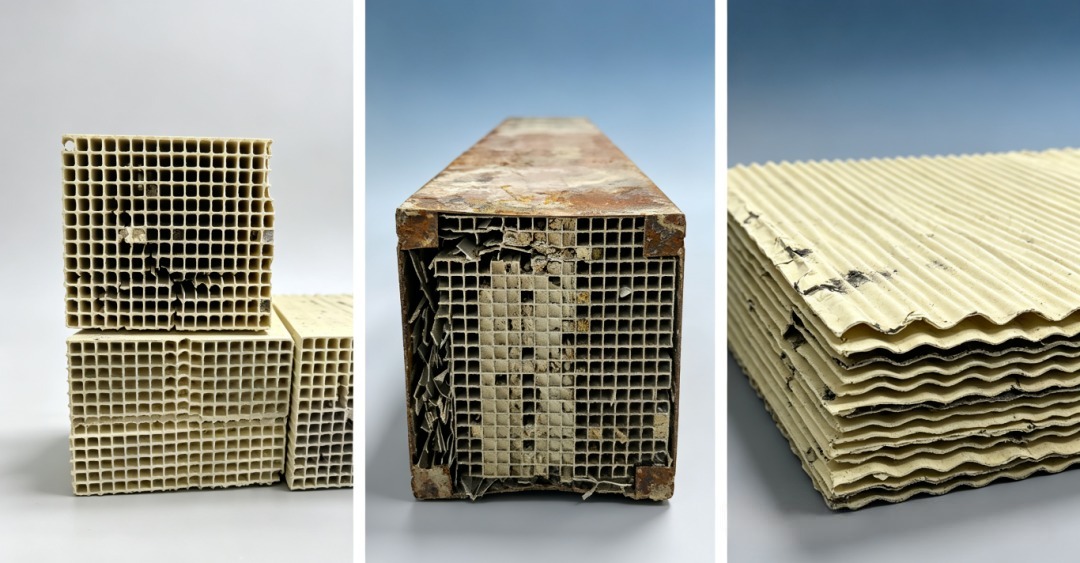
    In coal-fired power plant flue gas denitrification, the Selective Catalytic Reduction (SCR) catalyst serves as the core engine. The stability of DeNOx efficiency, compliance with emission standards, operational costs, and overall system lifespan all depend heavily on catalyst performance. For plant operators, engineers, and procurement managers, issues like catalyst plugging, poisoning, mechanical wear, and premature deactivation are common headaches. This guide breaks down the essential technical aspects of SCR catalysts: chemical composition, selection standards, structural comparisons, deactivation mechanisms, and end-of-life management. 1. Chemical Composition of SCR Catalysts Commercial SCR catalysts for power plants are multi-component composite systems. The precise formulation determines the catalyst's operating temperature window, DeNOx activity, and resistance to chemical poisoning. Typical industrial formulations include: Titanium Dioxide (TiO₂): The primary carrier/substrate (typically in the anatase form). It provides the structural surface area to disperse active phases, suppresses SO₂ oxidation, and ensures stability under harsh, corrosive flue gas conditions. Vanadium Pentoxide (V₂O₅): The primary active phase. It drives the redox reaction that reduces NOx into N₂ and H₂O. Its concentration is tailored based on the specific flue gas temperature and concentration profile. Tungsten Trioxide (WO₃): A promoter that enhances thermal stability, prevents structural sintering at high temperatures, and strengthens the electronic interaction between the active phase and the carrier. Molybdenum Trioxide (MoO₃): An optional promoter used specifically to enhance arsenic resistance. It is critical for plants burning high-arsenic coal. Structural Additives (SiO₂, Al₂O₃): Added to improve mechanical strength, fracture toughness, and erosion resistance in high-dust environments. 2. 5 Engineering Metrics for Quality Evaluation To withstand the harsh environments of power plant flue gas (high dust, high temperature, and complex chemical trace elements), a high-grade SCR catalyst must satisfy five distinct technical requirements: High DeNOx Activity: Sustained, high-efficiency NOx removal rates across varying boiler loads, ensuring strict compliance with local emission limits. Optimal Reaction Selectivity: Ensures the reducing agent (NH₃) reacts precisely with NOx rather than being oxidized by oxygen. This maximizes chemical efficiency and minimizes downstream ammonia slip. Superior Mechanical Integrity: High crushing strength and erosion resistance to withstand continuous bombardment by high-velocity fly ash particles, preventing structural cracking during installation and operation. Robust Poisoning Resistance: The ability to resist chemical attack from trace elements within the fly ash, such as arsenic, alkali metals, and alkaline earth metals. Balanced Chemical Stability: Minimal SO₂ to SO₃ oxidation rates (typically below 1%), excellent thermal s...
    View More
  • Asphalt Mixing Plant Emission Control: Optimizing Bag Filter Lifespan & TCO
    Jul 21, 2026 Asphalt Mixing Plant Emission Control: Optimizing Bag Filter Lifespan & TCO
    For asphalt plant managers, the exhaust stack is more than just a piece of hardware—it is a continuous compliance gauge. The intense thermal load, sticky hydrocarbon vapors, and heavy aggregate dust generated during hot mix production create one of the most punishing environments for industrial air filtration. One misstep in your dust collection strategy doesn't just mean an environmental citation; it directly threatens your daily production capacity. Achieving consistent emissions below 10 mg/Nm³ while keeping operating costs under control requires moving beyond standard maintenance. It demands a granular understanding of how your filtration media interacts with structural gas flow. This comprehensive guide breaks down the core engineering principles needed to maximize the efficiency of your asphalt baghouse and slash your Total Cost of Ownership (TCO). The Engineering Reality of Hot Mix Asphalt Emissions Dust emissions in an asphalt mixing station are highly dynamic. The process begins in the rotary drying drum, where cold aggregates are heated and cascaded, creating a massive upstream dust load. Subsequent stages—including the hot elevator, screen decks, and aggregate weigh hoppers—generate fine, abrasive particulates that must be continuously evacuated under negative pressure. With global standards like the US EPA NESHAP, European BREF directives, and localized green manufacturing mandates tightening yearly, relying on outdated filtration designs is a liability. Modern baghouse systems are no longer treated as simple add-ons; they are high-precision reactors that determine whether a plant is legally permitted to operate. Pre-Separation Technology: Why Mechanical Collectors Are Essential Deploying a bag filter as a single-stage solution against raw drum exhaust is a recipe for premature fabric failure. Coarse aggregate particles traveling at high velocity act like sandblasters, cutting through fabric fibers within weeks. To prevent this, a highly optimized two-stage interception setup is mandatory: Stage 1: The Heavy-Duty Cyclone (Pre-separator) – Utilizing centrifugal forces, the pre-separator drops out 85% to 90% of the heavy, coarse particulate mass before it ever reaches the filter house. This reclaimed grit is immediately recycled back into the mix as valuable filler. Stage 2: The Pulse-Jet Baghouse – Receiving only the micro-fine fraction, the secondary fabric filter operates under a dramatically reduced dust cake load, resulting in uniform pressure drops and significantly prolonged bag life. Precision Grid Alignment of High-Temperature Bag Filters for Industrial Smelting and Asphalt Plants Selecting the Ideal Media: Aramid Fiber vs. Extreme Conditions The operational survival of your baghouse relies entirely on the chemical and thermal limits of your filter media. Flue gases leaving an asphalt drum consistently hover between 140°C and 180°C, frequently spiking during burner adjustments. Standard polymers like polyester fail instantly un...
    View More
  • High Temperature Bag Filters: Complete Filtration Solutions for Extreme Conditions
    Jul 09, 2026 High Temperature Bag Filters: Complete Filtration Solutions for Extreme Conditions
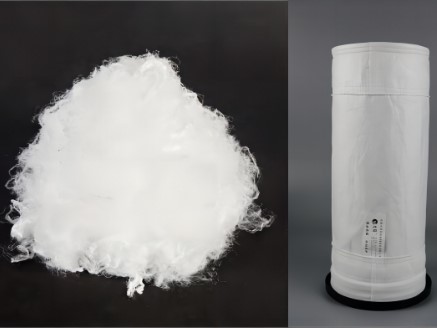
    In our years of field engineering diagnosing struggling air pollution control systems, we have seen millions of dollars wasted on the wrong filter media. Plant managers often call us when their dust collectors are plagued by high differential pressure, fabric blinding, or bags melting directly onto the support cages. This usually happens because someone treated industrial filtration as a commodity rather than a precise thermodynamic and chemical challenge. When your process air operates continuously above 180°C (356°F), standard filtration media like polyester or polypropylene will fail within hours. Managing fly ash from coal-fired boilers, clinker dust from cement rotary kilns, or aggressive gases from waste-to-energy plants requires dedicated high temperature bag filters: complete filtration solutions for extreme conditions. True operational reliability requires balancing dust release, mechanical flexing, and intense thermal resistance. The High-Temperature Material Matrix: Choosing Your Shield There is no single "magic fabric" for extreme conditions. In our field diagnostics, we analyze the exact gas chemistry—specifically looking for moisture levels, oxygen content, and acid dew points—before picking a needle felt or woven structure. Here are the true workhorses of high-temperature industrial gas cleaning: PPS (Polypetrafluoroethylene Phenylene Sulfide): Excellent for coal-fired boilers operating around 160°C to 190°C. It offers superb acid resistance but requires strict oxygen control (typically below 8-10%) to prevent oxidative degradation. Nomex / Aramid: The industry standard for asphalt mixing plants. It thrives in dry heat up to 200°C and features high mechanical strength, but it is highly vulnerable to moisture-driven hydrolysis if your flue gas hits the dew point. Fiberglass (Glass Fiber Blend): A highly cost-effective option for temperatures up to 260°C. Because glass fibers are brittle, we always blend them with specialized chemical finishes or P84 to prevent mechanical wear during pulse-jet cleaning. P84 (Polyimide): Instantly recognizable by its golden color and trilobal fiber structure. This unique shape increases the active filtration surface area by up to 80% compared to round fibers, delivering unmatched efficiency for capturing sub-micron dust in cement and incineration plants. Pure PTFE (Teflon): The gold standard for absolute chemical immunity (pH 1–14) and continuous thermal load handling at 240°C–260°C. It is virtually immune to hydrolysis and chemical attack. Engineering Failures: Why High Temperature Bags Fail Prematurely Selecting the right fiber polymer is only 50% of the battle. In our engineering practice, the majority of field failures do not stem from the fabric melting; they happen due to mechanical shortcuts or chemical oversight at the manufacturing level. Thread Disintegration: A bag is only as strong as its seams. If an engineer uses a standard aramid sewing thread in a high-sulfur flue gas stream, the acid ...
    View More
  • Dust Filter Bag Materials: Polyester vs Nomex vs Fiberglass - What is Best for Your Application?
    Jul 20, 2023 Dust Filter Bag Materials: Polyester vs Nomex vs Fiberglass - What is Best for Your Application?
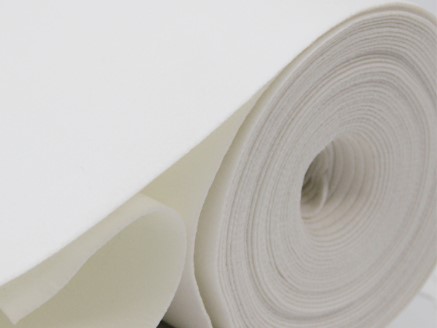
    Description: Selecting the optimal filter bag material is crucial for maximizing the performance and lifespan of industrial dust collection systems. This article provides a detailed comparison of the three most common types of filter bags - polyester, Nomex, and fiberglass. Learn about the unique properties, advantages, disadvantages, and ideal applications for each filter material. Discover which factors to consider such as operating temperature, chemical resistance, efficiency, abrasion resistance and cost. Get recommendations on choosing the right filter bag for your specific emission stream and process conditions. With this guide, you'll be equipped to select the perfect filter bags to meet your plant's particulate emissions control needs. The proper baghouse filter bag material improves filtration efficiency, reduces operating costs, and ensures compliance with air quality standards. * Polyester Filter Bags: Advantages of Polyester Filter Bags: Polyester felt is one of the most common dust filter bag materials due to its balance of performance and cost-effectiveness. Polyester filter bags are constructed of polyester fibers woven into a felt material. 1. Low Cost - Polyester is the least expensive filter media, making it economical for many applications. The bags are easy to manufacture. 2. Widely Available - Many suppliers offer polyester bags in a range of sizes and configurations for simple replacement. 3. Adequate Temperature Resistance - Can withstand temperatures up to 180°C continuously, suitable for many flue gas streams. 4. Moisture Resistance - Polyester has moderately good resistance to humidity and water. 5. Easy Handling - The lightweight polyester construction makes installation and change-out simpler. Disadvantages of polyester filter bags: Not recommended for fine particulate filtration applications. You can also directly consult our sales engineers for free consultation services regarding your dust collection and denitrification projects. ↓ ↓ ↓ ↓ ↓ Contact us now! * Nomex Filter Bags: Nomex filter bags are made of high-temperature resistant synthetic fibers that provide excellent filtration performance in hot, demanding industrial applications. Nomex bags offer superior chemical and abrasion resistance, lasting up to twice as long as other filter materials. Advantages of Nomex Filter Bags: 1. High Maximum Temperature - Can withstand continuous temperatures up to 260°C, with excursion temperatures up to 310°C. This makes Nomex suitable for hot flue gas streams. 2. Chemical Resistance - Nomex has excellent resistance to acids, alkalis, greases, oils and a wide range of organic solvents. It is unaffected by most chemicals encountered in industrial flue gas. 3. Long Service Life - Nomex is highly resistant to abrasion and flexing compared to other filter materials. Properly installed Nomex bags can last up to twice as long as polyester or fiberglass. 4. High Filtration Efficiency - The sub-micron Nomex fibers have a fine web str...
    View More
  • Common Filter Bag Cage Types and Selection
    Jun 07, 2023 Common Filter Bag Cage Types and Selection
    1. Stainless steel bag cage: This bag cage is made by stainless steel. When it comes to stainless steel banding, the three most commonly used grades are: Type 201, type 304 and type 316. Here are 3 typical working conditions where stainless steel bag cages are used: 1.1 High-temperature environments: Stainless steel bag cages are resistant to high temperatures and can withstand the heat generated by industrial processes. They are commonly used in applications such as incinerators, power plants, and metal smelting facilities, where the gas streams may reach elevated temperatures. 1.2 Corrosive or aggressive atmospheres: Stainless steel is highly corrosion-resistant, making it suitable for environments where the gas stream contains corrosive elements, such as acidic gases or chemical fumes. Industries like chemical processing, pharmaceuticals, and wastewater treatment often require the use of stainless steel bag cages to withstand these harsh conditions. 1.3 Heavy-duty industrial applications: Stainless steel bag cages are employed in heavy-duty industries like mining, cement production, and steel manufacturing, where the gas streams carry large amounts of dust and particulate matter. The robust nature of stainless steel allows the bag cages to withstand the abrasive nature of the particles and ensure efficient filtration. Due to its relatively high cost, many customers choose stainless steel skeletons only in special cases. ↓ ↓ ↓ ↓ ↓ Share your Company info. Get latest price list for stainless steel bag cage. 2. Silicone coating bag cage mainly using on working conditions such as: 2.1 Adhesive or sticky dust: Some industrial processes generate dust particles that have adhesive properties, making them stick to surfaces. Silicone coating on bag cages prevents the dust from adhering to the cage, making it easier to clean and maintain the filtration system. Industries like woodworking, pharmaceutical granulation, and certain food processing applications often benefit from the use of silicone-coated bag cages. 2.2 Anti-static requirements: In environments where there is a risk of electrostatic discharge, such as in industries dealing with flammable or explosive dusts, silicone coating can provide anti-static properties to the bag cages. This helps minimize the risk of sparks or ignition that could lead to accidents. Examples of such industries include chemical manufacturing, coal handling, and grain processing. 2.3 Chemical resistance: Silicone coating offers resistance to a wide range of chemicals, making it suitable for environments where the gas stream contains corrosive gases or chemicals. Industries like petrochemical refining, metal plating may use silicone-coated bag cages to withstand the chemical exposure and ensure effective filtration. Silicone coating provides excellent water repellent properties, making it ideal for applications where high levels of moisture or humidity are present. ↓ ↓ ↓ ↓ ↓ Share your Company info. Get latest price ...
    View More
  • Baghouse Use High Temperature Filter Media Summary
    May 24, 2023 Baghouse Use High Temperature Filter Media Summary
    At present, industrial pollution is the largest source of PM2.5 in China, with cement manufacturing, coal-fired power plants, and steel metallurgy being the 3 major culprits among industrial pollution sources. Therefore, industrial filtering cannot be ignored in the management of PM2.5. Sources of PM2.5 (Source: IPE) However, industrial filtering is not an easy task, because industrial fumes are hot and often contain acidic and alkaline gases, which require high requirements for the technology and materials used for industrial filtering. At present, there are two mainstream technologies for industrial dust removal, namely electrostatic precipitator and bag type precipitator. Based on these two, electric bag composite precipitator is derived. Comparison of Economic Performance of Three Dust Collector Technologies Bag Filter - The mainstream technology for industrial dust control: Currently, electrostatic precipitator technology in China has reached the stage of mature application, bag filter technology is in a period of rapid development. However, as the national requirements for controlling industrial flue gas pollution continue to improve, electrostatic precipitator technology alone cannot fully meet the requirements. The use of bag filter technology and electrostatic bag composite dust collectors as replacements for electrostatic precipitator technology has become mainstream. Mechanism of bag filters: Special fibers are used to make filter bags, and the dusty gas is injected into the bags, where the dust is filtered and captured. The filtering effect depends on the quality of the filter bags. Structure of Bag Filter (Source: Hitachi Plant Construction, Ltd. 56 ) You can also directly consult our sales engineers for free consultation services regarding your dust collection and denitrification projects. ↓ ↓ ↓ ↓ ↓ Contact us now! High temperature Filter Material - The core material of bag filters The filtering effect of bag filters is achieved through filtering materials. Different filtering effects can be achieved by equipping various types of filter bags with different properties, such as resistance to normal temperature(<130℃), resistance to high temperature(>130℃), corrosion resistance, water and oil repellent, fire and explosion prevention, and long service life (2-4 years). The changes and innovations in bag filter technology are closely related to the transformation of filter materials. Currently, the main high-temperature filter fibers used for flue gas treatment domestically and internationally include PPS (polyphenylene sulfide), Nomex (aromatic polyamide), P84 (polyimide), PTFE (polytetrafluoroethylene), glass fibers, and PSA (polyphenylene sulfone) fibers. In practical applications, multiple fibers are often used in combination. Production processes include needle punching, surface coating, emulsion impregnation, etc., which can achieve surface filtration and gradient filtration effects. This not only improves the dust ...
    View More

1 2 3 ... 17

A total of 17 pages

Leave A Message
If you are interested in our products and want to know more details,please leave a message here,we will reply you as soon as we can.

Home

Products

about

contact