• Analysis of the advantages and disadvantages of the most commonly used desulfurization technologies
    Mar 11, 2021 Analysis of the advantages and disadvantages of the most commonly used desulfurization technologies
    At present, the commonly used flue gas desulfurization methods at home and abroad can be divided into three types of desulfurization processes: wet, semi-dry, and dry according to whether water is added during the desulfurization process and the dry and wet form of the desulfurization product. 1. Wet desulfurization Advantages: gas-liquid reaction, fast reaction speed, high desulfurization efficiency, generally higher than 90%, mature technology and wide application. The technology is relatively mature, and the production and operation are safe and reliable, accounting for more than 80% of the total installed capacity of desulfurization. Disadvantages: The product is liquid or sludge, which is difficult to handle, the equipment is severely corrosive, the flue gas needs to be reheated after washing, the energy consumption is high, the area is large, and the investment and operating costs are high. The system is complex, the equipment is huge, the water consumption is large, and the one-time investment is high. It is generally suitable for large-scale power plants. Technical route: limestone/lime-gypsum method, indirect limestone-gypsum method, lemon absorption method, etc. 2. Dry desulfurization Advantages: gas-solid reaction, compared with wet desulfurization system, the equipment is simple, the area is small, the investment and operating costs are lower, the operation is convenient, the energy consumption is low, the product is easy to handle, and there is no sewage treatment system. Disadvantages: slow reaction speed, low desulfurization rate, advanced up to 60-80%. The desulfurization efficiency is low, the absorbent utilization rate is low, the abrasion and fouling phenomenon are more serious, the equipment maintenance is more difficult, the stability and reliability of the equipment operation are not high, and the service life is short. Technical route: activated carbon adsorption method, electron beam radiation method, charged dry absorbent injection method, metal oxide desulfurization method, etc. 3. Semi-dry desulfurization Semi-dry desulfurization includes spray drying desulfurization, semi-dry and semi-wet desulfurization, powder-particle spouted bed desulfurization, flue jet desulfurization, etc.. 1. Spray drying method Disperse the absorbent into very small mist droplets by the force of machinery or air flow. The mist droplets and the flue gas form a relatively large contact surface area. A kind of heat exchange, mass transfer and integration between the gas and liquid phases occurs. Desulfurization method of chemical reaction. Commonly used absorbents are lye, lime milk, limestone slurry, etc. At present, most devices use lime milk as absorbent. Under normal circumstances, the desulfurization rate of this method is 65%-85%. Advantages: Desulfurization is carried out in the three-phase state of gas, liquid, and solid. The process equipment is simple. The product is dry CaSO3 and CaSO4, which is easy to handle, has no serious equipment...
    View More

  • Yuanchen Technology: Deeply cultivate the field of coordinated governance of pollution reduction and carbon reduction to help achieve the ambitious goal of
    Mar 11, 2021 Yuanchen Technology: Deeply cultivate the field of coordinated governance of pollution reduction and carbon reduction to help achieve the ambitious goal of
    Anhui Yuanchen Environmental Protection Technology Co., Ltd. (hereinafter referred to as "Yuanchen Technology") is mainly engaged in the research and development, production, sales and service of flue gas purification, energy-saving and environmental protection filter materials, and provides corresponding online monitoring, environmental testing, and hazardous waste recycling services . Yuanchen Technology serves the national sustainable development strategy of the ecological environment, and has long been committed to the research and development and production of new materials in the field of pollution reduction and carbon reduction and the integration of upstream and downstream industrial chains, relying on strong scientific research capabilities and deepening of the industrialization of core technologies. , Embarked on the fast lane of accelerated development. From 2017 to 2020, the company's operating income was 267 million yuan, 324 million yuan, 363 million yuan, and 458 million yuan; the net profits attributable to the parent were 36 million yuan, 38 million yuan, 59 million yuan, and 63 million yuan, respectively. Recently, Yuanchen Technology made its initial public offering of new shares and listed on the Science and Technology Innovation Board of the Shanghai Stock Exchange. The raised funds are planned to be used in the "Industrialization Project of High-performance Dust Removal Filter Material with an Annual Output of 4.6 million Square Meters". Another historic moment in China.
    View More
  • Give full play to the leading role of innovation and promote the rapid development of enterprises-Xinzhan High-tech Zone Federation of Trade Unions awarded Yuanchen Technology Zhou Guanchen Blue Colla
    Mar 11, 2021 Give full play to the leading role of innovation and promote the rapid development of enterprises-Xinzhan High-tech Zone Federation of Trade Unions awarded Yuanchen Technology Zhou Guanchen Blue Colla
    In order to further promote the spirit of model workers and craftsmen, give full play to the role of model workers and mobilize the labor enthusiasm and innovation vitality of the majority of employees. On the afternoon of February 19th, Zhang Zhuqing, vice chairman of the Federation of Trade Unions of Xinzhan High-tech Zone, led a team to Anhui Yuanchen Environmental Protection Technology Co., Ltd. to award the "Zhou Guanchen Blue Collar Innovation Studio" which was standardized at the municipal level. Zhang Zhuqing conducted a field visit to Zhou Guanchen’s blue-collar innovation studio, listened to the introduction of the innovation studio’s operation, learned in detail about the innovation studio’s organizational structure, rules and regulations, work objectives, innovation results, etc., and the innovation results achieved by the innovation studio The patent project is fully affirmed. It is hoped that the blue-collar innovation studio will give full play to the role of “passing and leading”, centering on technological innovation, product innovation and management innovation, and earnestly exerting its own professional expertise and technical advantages, and driving a group of innovative and technical talents to help the enterprise speed up Contribute to development. Zhou Guanchen’s Blue Collar Innovation Studio was founded in May 2020 and is composed of 13 members from Yuanchen Science and Technology Innovation Research Institute and Project R&D Center. It mainly carries out technological innovation activities around themes such as cost reduction, energy saving and emission reduction, technological transformation, and safe production. In the past two years, it has successively obtained 4 international PCT patent applications, 33 authorized invention patents, 31 authorized utility models, the second prize of Anhui Science and Technology Award for Key Technology Research and Industrialization of Industrial Exhaust Gas Denitration, and the "115" Industrial Innovation Team of Anhui Province , Anhui Province Science and Technology Major Projects and many other honors. In the next step, the Federation of Trade Unions of Xinzhan High-tech Zone will continue to increase the establishment of municipal-level standardized model workers and blue-collar innovation studios, provide good services in policy guidance, hardware construction, and financial support, and actively serve the region’s strategic emerging industries. Leading companies build platforms for innovation and communication, vigorously carry out various innovation and profit-making activities such as technological innovation, management innovation, and service innovation, give full play to the role of model workers in the new era, promote the cultivation and training of outstanding innovative teams, and build model workers and blue-collar innovation studios It is a base for employee innovation, skills training, and a base for promoting the spirit of model workers.
    View More
  • Carbon neutrality opens a new track for the environmental protection industry
    Mar 11, 2021 Carbon neutrality opens a new track for the environmental protection industry
    In September 2020, at the 75th session of the UN General Assembly, President Xi proposed for the first time the goal of "striving to reach the peak of carbon dioxide emissions by 2030 and striving to achieve carbon neutrality by 2060", to achieve a green and low-carbon goal for our country. The development indicates the direction, and the environmental protection industry has thus ushered in huge development opportunities. On March 13, 2021, the "Outline of the Fourteenth Five-Year Plan for the National Economic and Social Development of the People's Republic of China and the Long-term Goals for 2035" (referred to as the "Fourteenth Five-Year Plan" outline) was officially announced, proposing that Change the national independent contribution target and formulate an action plan for peaking carbon emissions by 2030." The agency said that under the guidance of a series of policies to reduce carbon emissions, energy conservation, environmental protection, clean energy and other fields will usher in new development opportunities. On March 12, the performance of carbon neutral stocks continued to be strong, and a number of power stocks such as Wenshan Power and Huayin Power all reached their daily limits. According to statistics from Flush, as of March 12, the Flush Carbon Neutral Index has risen 9.89% since March. Among 61 constituent stocks, a total of 56 have recorded positive gains in the month, accounting for 91%. To achieve carbon neutrality, one of the most urgent measures at present is to vigorously control air pollution. Yuanchen Technology is the one who has been deeply involved in this field for many years. Yuanchen Technology’s main business products are various types of high-efficiency and low-resistance dust removal filter bags and medium and low temperature SCR denitration catalysts. While saving energy and increasing efficiency, they are specially used to treat smoke and nitrogen oxides in industrial flue gas, which belong to air pollution control. An indispensable and important component has an important strategic position in the national air pollution prevention and control process. Its market demand, technical level and the development and growth of the entire industry are also closely related to the continuous deepening of national environmental protection requirements. Tighter pollution emission control is a key factor that promotes the rapid development of the bag dust removal and flue gas denitrification industries. The bag dust removal and denitrification industries are policy-driven industries. In recent years, many industrial policies have been issued for flue gas dust removal and denitrification products. To encourage and give priority to the development of manufacturing and application. The report of the 19th National Congress of the Communist Party of China pointed out that we should adhere to the common governance of the whole people, source prevention and control, continue to implement air pollution prevention and control...
    View More
  • Asphalt Mixing Plant Emission Control: Optimizing Bag Filter Lifespan & TCO
    Jul 21, 2026 Asphalt Mixing Plant Emission Control: Optimizing Bag Filter Lifespan & TCO
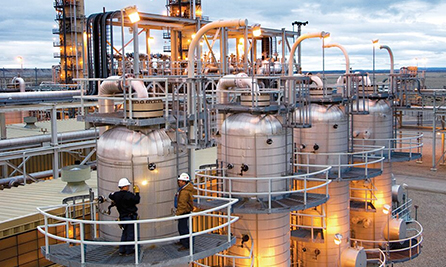
    For asphalt plant managers, the exhaust stack is more than just a piece of hardware—it is a continuous compliance gauge. The intense thermal load, sticky hydrocarbon vapors, and heavy aggregate dust generated during hot mix production create one of the most punishing environments for industrial air filtration. One misstep in your dust collection strategy doesn't just mean an environmental citation; it directly threatens your daily production capacity. Achieving consistent emissions below 10 mg/Nm³ while keeping operating costs under control requires moving beyond standard maintenance. It demands a granular understanding of how your filtration media interacts with structural gas flow. This comprehensive guide breaks down the core engineering principles needed to maximize the efficiency of your asphalt baghouse and slash your Total Cost of Ownership (TCO). The Engineering Reality of Hot Mix Asphalt Emissions Dust emissions in an asphalt mixing station are highly dynamic. The process begins in the rotary drying drum, where cold aggregates are heated and cascaded, creating a massive upstream dust load. Subsequent stages—including the hot elevator, screen decks, and aggregate weigh hoppers—generate fine, abrasive particulates that must be continuously evacuated under negative pressure. With global standards like the US EPA NESHAP, European BREF directives, and localized green manufacturing mandates tightening yearly, relying on outdated filtration designs is a liability. Modern baghouse systems are no longer treated as simple add-ons; they are high-precision reactors that determine whether a plant is legally permitted to operate. Pre-Separation Technology: Why Mechanical Collectors Are Essential Deploying a bag filter as a single-stage solution against raw drum exhaust is a recipe for premature fabric failure. Coarse aggregate particles traveling at high velocity act like sandblasters, cutting through fabric fibers within weeks. To prevent this, a highly optimized two-stage interception setup is mandatory: Stage 1: The Heavy-Duty Cyclone (Pre-separator) – Utilizing centrifugal forces, the pre-separator drops out 85% to 90% of the heavy, coarse particulate mass before it ever reaches the filter house. This reclaimed grit is immediately recycled back into the mix as valuable filler. Stage 2: The Pulse-Jet Baghouse – Receiving only the micro-fine fraction, the secondary fabric filter operates under a dramatically reduced dust cake load, resulting in uniform pressure drops and significantly prolonged bag life. Precision Grid Alignment of High-Temperature Bag Filters for Industrial Smelting and Asphalt Plants Selecting the Ideal Media: Aramid Fiber vs. Extreme Conditions The operational survival of your baghouse relies entirely on the chemical and thermal limits of your filter media. Flue gases leaving an asphalt drum consistently hover between 140°C and 180°C, frequently spiking during burner adjustments. Standard polymers like polyester fail instantly un...
    View More
  • High Temperature Bag Filters: Complete Filtration Solutions for Extreme Conditions
    Jul 09, 2026 High Temperature Bag Filters: Complete Filtration Solutions for Extreme Conditions
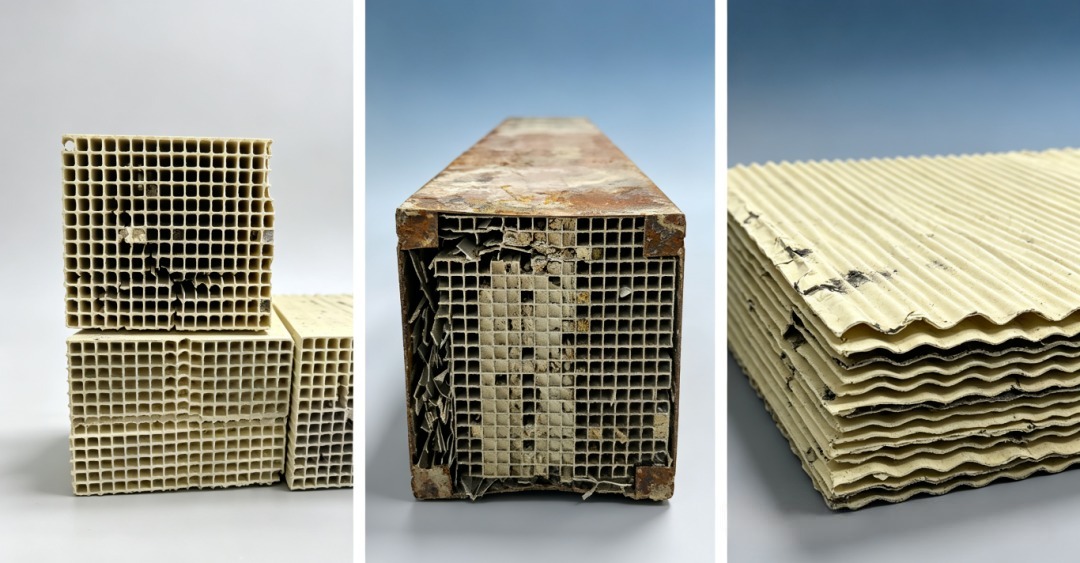
    In our years of field engineering diagnosing struggling air pollution control systems, we have seen millions of dollars wasted on the wrong filter media. Plant managers often call us when their dust collectors are plagued by high differential pressure, fabric blinding, or bags melting directly onto the support cages. This usually happens because someone treated industrial filtration as a commodity rather than a precise thermodynamic and chemical challenge. When your process air operates continuously above 180°C (356°F), standard filtration media like polyester or polypropylene will fail within hours. Managing fly ash from coal-fired boilers, clinker dust from cement rotary kilns, or aggressive gases from waste-to-energy plants requires dedicated high temperature bag filters: complete filtration solutions for extreme conditions. True operational reliability requires balancing dust release, mechanical flexing, and intense thermal resistance. The High-Temperature Material Matrix: Choosing Your Shield There is no single "magic fabric" for extreme conditions. In our field diagnostics, we analyze the exact gas chemistry—specifically looking for moisture levels, oxygen content, and acid dew points—before picking a needle felt or woven structure. Here are the true workhorses of high-temperature industrial gas cleaning: PPS (Polypetrafluoroethylene Phenylene Sulfide): Excellent for coal-fired boilers operating around 160°C to 190°C. It offers superb acid resistance but requires strict oxygen control (typically below 8-10%) to prevent oxidative degradation. Nomex / Aramid: The industry standard for asphalt mixing plants. It thrives in dry heat up to 200°C and features high mechanical strength, but it is highly vulnerable to moisture-driven hydrolysis if your flue gas hits the dew point. Fiberglass (Glass Fiber Blend): A highly cost-effective option for temperatures up to 260°C. Because glass fibers are brittle, we always blend them with specialized chemical finishes or P84 to prevent mechanical wear during pulse-jet cleaning. P84 (Polyimide): Instantly recognizable by its golden color and trilobal fiber structure. This unique shape increases the active filtration surface area by up to 80% compared to round fibers, delivering unmatched efficiency for capturing sub-micron dust in cement and incineration plants. Pure PTFE (Teflon): The gold standard for absolute chemical immunity (pH 1–14) and continuous thermal load handling at 240°C–260°C. It is virtually immune to hydrolysis and chemical attack. Engineering Failures: Why High Temperature Bags Fail Prematurely Selecting the right fiber polymer is only 50% of the battle. In our engineering practice, the majority of field failures do not stem from the fabric melting; they happen due to mechanical shortcuts or chemical oversight at the manufacturing level. Thread Disintegration: A bag is only as strong as its seams. If an engineer uses a standard aramid sewing thread in a high-sulfur flue gas stream, the acid ...
    View More

1 ... 36 37 38 39 40 ... 59

A total of 59 pages

Leave A Message
If you are interested in our products and want to know more details,please leave a message here,we will reply you as soon as we can.

Home

Products

about

contact